



Introduction
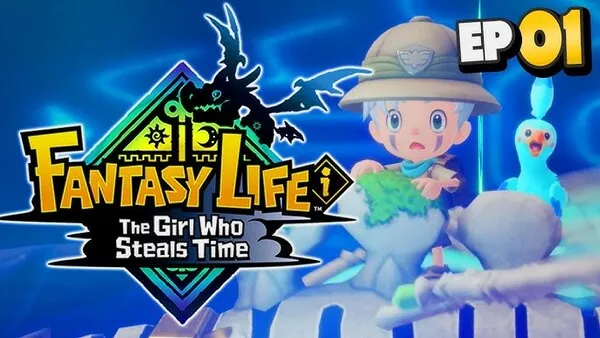
FANTASY LIFE i: The Girl Who Steals Time looks, on paper, like the kind of slow-life RPG that should never run out of steam: it lets you freely switch between 14 Lives, build and rebuild an island, fish, farm, craft, gather, and fight across a fantasy world that leans into comfort rather than pressure. Level-5 launched the game on May 21, 2025 for Switch, PS5, PS4, Xbox Series X|S, and Steam, with a Switch 2 edition arriving on June 5, 2025. That breadth is the first clue to its real design ambition: this is not a game about one perfectly tuned activity, but about the friction created when many pleasant systems all depend on one another.
The specific issue that defines the game, and the one that becomes most visible once the novelty wears off, is repetition. Not repetition in the abstract, but the way the game’s charming “do anything” structure quietly becomes a loop of gathering, crafting, ranking up, and returning to the same resource dependencies again and again. Reviews repeatedly describe the game as rewarding and generous, but also note that its gathering and crafting can become repetitive, and that the endgame can feel like “busywork” or a grind. That tension is where the game becomes most interesting, because its greatest strength is also the source of its fatigue.
The Game’s Promise Is Freedom, Not Momentum
Fantasy Life i does not begin by demanding that the player become a hero in the usual sense. It invites the player to live inside systems: one Life for combat, another for harvesting, another for making things, another for tending the social and economic threads of the island. Officially, the series’ new entry is built around 14 Lives, and Level-5 frames the whole experience as a “Social slow-life RPG.” That matters, because the game’s identity is tied to freedom of role rather than linear progress.
That freedom sounds relaxing, but it also changes how progress feels. In a traditional RPG, momentum comes from a clean chain of quests, battles, and level gains. Here, progress is distributed across many mini-goals: rank up a Life, gather materials, craft gear, complete requests, expand the island, unlock a path, then repeat the process in another Life. The game can easily become a place where you spend days fishing or mining instead of pushing the main story, which is a feature on the surface and a structural warning underneath. The game is comfortable because it never rushes you, but that same softness makes repetition more noticeable.
The Opening Hours Hide the Problem by Making Everything Feel New
In the early game, repetition is disguised as discovery. Every Life has just enough novelty to feel like a new skill tree rather than a chores list, and the first time you swap roles it feels clever that one character can be a miner, a cook, a hunter, and a fighter without friction.
But this is exactly why the later grind lands so hard. When each Life is fresh, the player accepts repeat tasks as onboarding. A few ore runs, a few plants gathered, a few items crafted, and the loop still feels like a lesson. The problem appears when the game asks for the same kind of attention after the systems are already understood. Then “learning” turns into “maintenance,” and maintenance is far less charming.
The Midgame Is Where the Island Stops Being a Destination and Becomes a Checklist
Once the player begins rebuilding and expanding the island, the game’s promise becomes more concrete and more burdensome. The island is no longer just a setting; it becomes a project that needs resources, labor, and repeated visits. This is where the game’s cozy fantasy begins to resemble project management.
That pressure is subtle because the game rarely sounds harsh. It is still warm, still playful, still inviting. Yet the island-building structure encourages a checklist mentality: do enough gathering to craft enough tools to unlock enough upgrades to open enough content. The game does not become bad, but it becomes administratively repetitive.
The Real Grind Comes from the Fact That Every Life Feeds the Others
The design looks elegant from a distance. A gathering Life supplies a crafting Life; a crafting Life equips a combat Life; a combat Life opens new areas that produce rarer materials; those materials go back into the economy again. In theory, this is an ecosystem. In practice, it is a dependency chain that can feel endless once the player starts chasing higher-tier progress.
Because any Life can lead into any other Life, the player is constantly aware that every task has a second life elsewhere in the system. Chop wood now so you can craft later. Craft later so you can fight better. Fight better so you can collect rarer things. Collect rarer things so you can go back to crafting. The loop is satisfying when it feels circular and complete, but it turns oppressive when it feels like the game is simply asking you to do the same three errands in a new order.
The Loop Inside the Loop
What makes the grind memorable is that it is layered. You are not only grinding for resources; you are often grinding to keep the right Life at the right rank so that the next resource run is efficient. That gives the player a sense of productivity, but it can also make every session feel like optimization disguised as relaxation.
Why That Matters for Pacing
The game is at its best when the player chooses one goal and follows it by instinct. It is at its worst when the player is nudged into spreadsheet thinking. Once you begin measuring the value of every action, the game’s softness does not disappear, but its friction becomes visible.
The Cooking, Crafting, and Gathering Systems Are Charming Until They Become a Second Job
The game’s minigames are important because they embody the whole design philosophy in miniature. Crafting is not a simple button press; it is a small performance. Gathering is not always a passive collection; it often asks for positioning, timing, and a sequence of actions.
But the problem is scale. A single enjoyable minigame is not the same thing as repeating that minigame dozens of times across multiple Lives and multiple progression tiers. When the player is making a delicious dish or forging a useful tool, the loop feels tactile and earned. When the player is doing that for the twentieth time in a row because a quest chain, a rank-up requirement, or an upgrade path demands it, the same system becomes a habit rather than a delight.
That criticism is not saying the mechanics are bad. It is saying the mechanics are overused. A good minigame can survive repetition if each run reveals a new layer of mastery or a meaningful reward. In Fantasy Life i, the rewards are real, but the path to them often feels mechanically similar no matter which Life you are improving.
The Game’s Generosity Reduces Frustration, but Not Monotony
One reason the game remains popular is that it is unusually forgiving. Its systems do not slam the player with harsh failure states, and that softness is part of why it has been so well received.
That generosity matters because it changes how the repetition feels emotionally. The game rarely says “you failed.” It usually says “keep going.” That tone makes the grind more palatable than in harsher RPGs, but it also means the game can stretch the same behavior for longer than the player expects.
- It gives you many activities instead of one main path.
- It rewards multitasking across Lives.
- It keeps failure mild and progress steady.
- It stretches that comfort into long sessions of repeated errands.
That list is the clearest summary of the design. The game is not a marathon of punishment; it is a long, soft conversation with repetition.
Time Travel Is a Brilliant Theme Because It Mirrors the Player’s Own Routine
The title promises time theft, and the game’s structure reflects that promise in an ironic way. You are constantly returning to earlier spaces, earlier tasks, earlier dependencies, and earlier rhythms. Even when the narrative moves forward, the player is often moving back through familiar systems to extract one more resource or finish one more request.
This is where the game becomes more interesting than a simple “grindy cozy RPG” label. Its loop is not just repetitive by accident; it is thematically aligned with the idea of stealing time. Each system asks for a little more of your attention, a few more minutes here, a few more minutes there, until the session becomes a patchwork of returns.
Performance Changes the Grind, but Does Not Erase It
Technical performance matters in a game like this because repetition is more tolerable when the game itself moves quickly. Better visuals, smoother frame rates, and shorter loading times all help reduce friction.
That said, a faster version of a repetitive game is still a repetitive game. Better performance can remove irritation, but it cannot change the shape of the loop. If the player’s complaint is that they are being asked to gather too many similar materials or craft too many similar items, higher frame rates will not solve the underlying pacing issue.
Post-Launch Support Shows the Team Knew the Game Needed Smoothing
Level-5 continued updating the game after launch with patches, bug fixes, and new content plans. This suggests the studio viewed the game as a living experience rather than a static product.
That matters because live support often reveals where developers see opportunities for improvement. Strong sales and a healthy player base gave the studio room to keep refining systems and addressing friction points that emerged after launch.
The Real Lesson Is That a Cozy Game Can Still Overstay Its Welcome
Fantasy Life i is not the kind of game that fails because of one bad mechanic. It succeeds because so many of its systems are pleasant that the player keeps coming back even when the loop begins to stretch.
Seen that way, the game’s strongest and weakest qualities are inseparable. The 14 Lives system is brilliant because it makes the world feel broad. The gathering and crafting loops are satisfying because they make every achievement feel earned. The island rebuilding is rewarding because it shows visible progress. But each of those strengths also feeds the same underlying cycle, and the cycle never fully escapes repetition.
Conclusion
The deepest issue in FANTASY LIFE i: The Girl Who Steals Time is not that it has grinding, but that it makes grinding look like a gentle lifestyle choice. That is why the game is so memorable: it uses warmth, flexibility, and charm to mask a structure built on repeated labor.
For players who enjoy optimization and slow accumulation, that structure is the whole attraction. For everyone else, the spell can break the moment the island begins to feel less like a fantasy home and more like a long to-do list. The game’s greatest achievement and its greatest flaw are ultimately the same thing: a beautifully designed loop that is sometimes too comfortable repeating itself.